Monday, March 14, 2011

Conceptual Art: Art as an idea


The popularization of conceptual art started in the 1960s and has continued until present day. It is through performance, installation, found or created objects, and many other forms that artists express ideas-based art. One of the first conceptualist was Marcel Duchamps with is piece Fountain (1917). At this moment in time, his piece changed the traditional conceptions of what art objects should be made of and what it should look like. Art should be about intellectual stimulation; the process matters more than the physical material.


This form of art has been perceived as shocking, skill-less, and controversial. Either you love or hate it. From my perspective, the job of conceptual artists is to encourage a new understanding of art, artists and artistic experience. The intellectual exploration of conceptual art is concerned with ideas and meanings, rather than forms and materials. Minimal artist Vito Acconci used himself as a subject in Seedbed (1972) in which he performed disturbing practices in order to demonstrate the conflict between private and public spaces and realms. Becoming the subject, Vito pushed the concept of allowing the viewer to experience the art in an unconventional way.


Conceptual art challenges our intuitions concerning the limits of what can be considered art. Where do we draw the line? These artists bring a new questioning to art. In some ways, any idea can be added to any object. What is the difference between art and a random item in a gallery setting? But any thoughtful man-made object may be considered art. What is important is the thought process of conception.


Conceptual art is not about creating beautiful master pieces or showing good technical work but presenting ideas. The creative process and meaning behind the finished piece is opposed to visual splendour of traditional art works. The viewer is force fed with an idea through the paintings. The person just admires and respects the technicality and aesthetic of the art piece. We don’t know about the development or the story behind it. The visual aspect is the most important value of traditional art. In the case of conceptual art, an image may be present, but the idea behind it is of greater importance than its execution or physical manifestation. I agree with Lewitt that in conceptual art, “banal ideas cannot be rescued by beautiful execution.” The power of art is behind the thinking not necessarily the finished work.


The conceptual art movement of the 1960s and 1970s continued to influence and animate the work of many artists of the late 20th and early 21st centuries.

MG-

Wednesday, March 2, 2011

Color Junkies

Color blocking / color proportion are something designers have been playing with, especially in the past three seasons. During my monthly rendezvous at MoMa, the Met and the New Museum, I have been inspired. Whether it is looking at minimalism, contemporary art, cubism or expressionism, I found that certain color combinations and proportions were extremely stimulating. Any fashion designer should paint their own “tableau” every season. I challenge you to create your own study of color. Here are some photos from recent visits.


Sunday, June 20, 2010

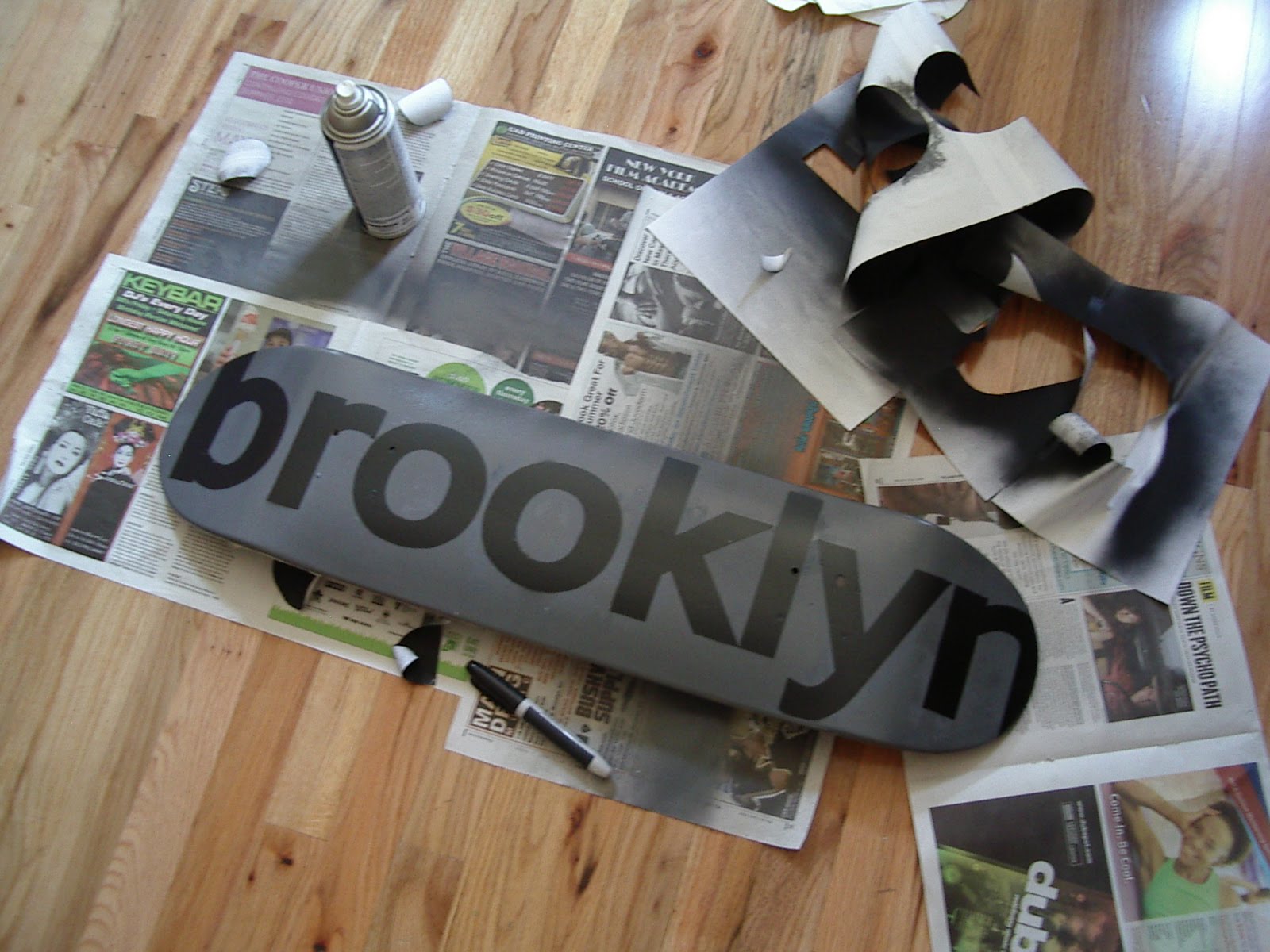
SKATEbored


I guess this post is kinda unrelated to this fashion/art realm but it was good creative boost for me on a morning when boredom was naggin' on me hard. I bought a new deck for go skateboarding day,(June 21st Monday), but did not really dig the graphics so I took it upon myself to make sure this purchase was not a mistake. After opening all the windows, I figured out a simple design, and then spray painted over the old graphic , made a stencil(cutting out with an exacto), and spraying on the choosen design on the newly dried deck. After a coat of clear gloss and some drying time, volia, a boring morning turns into a productive one, and a not so desirable graphic turns into something more close to the heart....hope this helps you to do something simple and creative on a slow day to keep the mood happy....


Thursday, June 17, 2010

The new X-Ray Pin-Up calendar 2010

Navigating through new blogs, I came across this post about a very interesting art / calendar project from Germany.


Advertising Agency: Butter, Berlin/Duesseldorf, Germany
Creative Director: Matthias Eickmeyer
Art Director: Nadine Schlichte
Illustrator/CGI: Carsten Mainz
Copywriter: Reinhard Henke

http://trendland.net/2010/06/17/x-ray-pin-up-calender/

Saturday, May 22, 2010

Death plays chess


Created for a series of photography, this laser cut cape represents the personification of death in Ingmar Bergman’s The Seventh Seal (1957). This project consists of re-creating famous Bergman scenes with a contemporary eye / approach.
*Laser cut Plexiglas, rubber, plastic, and vinyl.


Compulsion


*Silkscreen on Vinyl

I like exploring the notion of repetition, and multiples. Time, action, space, and object can be created or re-created as a repetitive pattern. Only by repetition does a certain action and the realities it symbolizes become more enjoyable, and hence efficacious. By standardization or multiplication of images, (Compulsion to repeat), the experience can be translated as pleasure (positive affective experience).

My goal was to capture the beauty in repetition and the idea of multiples. By using different colors and materials such as vinyl, I printed a series of human organs. Kaleidoscopes always fascinated me as visual experience. Mirrors were use for diffusion of images creating reflection. I will also look at the notion of defect, or where certain out of place objects are placed in a group of similar ones.


Friday, April 16, 2010

3D Printmaking Art installation.

I explored different materials by using powder 3D Rapid prototyping. In the Maya program, I virtually created zippers, buttons and care labels. I was interested in being part of the making from its very first origin. By producing objects of mass-production with your own hands, the maker experiences the process and gain a closer connection to the finished product. The transparency of the vinyl and the delicateness of the silk chiffon also illustrate the opposition in material. We do not think about the materiality of a zipper, care labels or buttons as per they feel and are made in similar matters. By being involved in the process, the creator has control over every single aspect of the product, which I am interested in.